Bosch GET65-5N vs Bosch GET75-6N: Which Sander Is Better for DIY?
If you are deciding between the Bosch GET65-5N and Bosch GET75-6N, here is the practical answer:
- Choose GET65-5N if you want better control, less fatigue, and easier handling across mixed DIY tasks.
- Choose GET75-6N if your priority is faster stock removal on large, flat surfaces.
Both are excellent dual-mode sanders. The right choice depends more on your real workload than on headline specs.
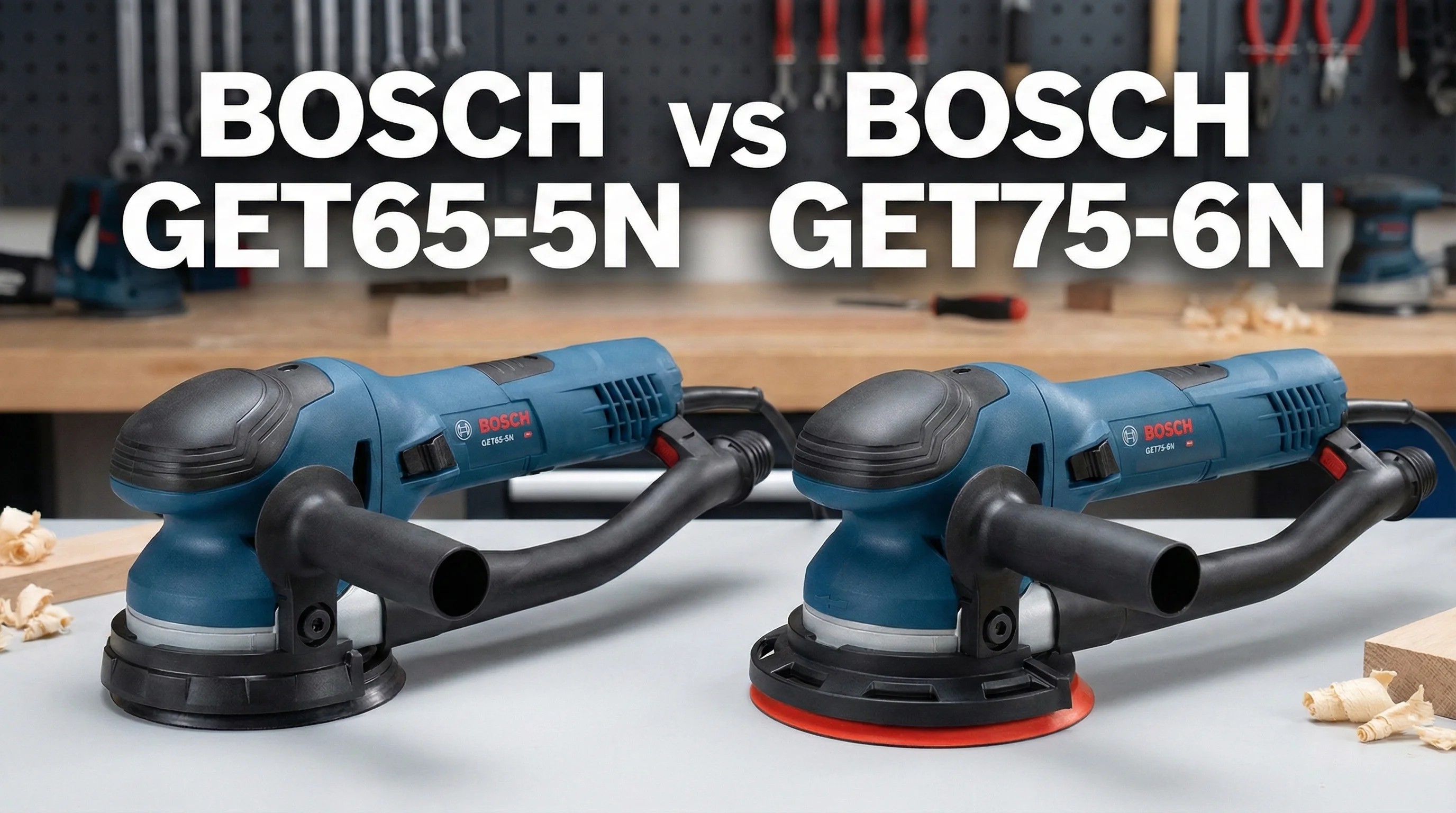
Bosch GET65-5N
Best for control-first DIY workflows
If you sand mixed pieces, edges, and vertical surfaces, GET65-5N is usually easier to manage.
Check the priceBosch GET75-6N
Best for speed on large flat panels
If your priority is faster stock removal and broad surface coverage, GET75-6N is the stronger fit.
Check the priceQuick Verdict (30 Seconds)
For mixed DIY work (furniture, trim, edges, vertical pieces), GET65-5N is usually the safer long-term choice.
For repetitive panel sanding (tabletops, slab work, cabinet runs), GET75-6N is usually faster.
Practical rule
- Control and consistency first -> GET65
- Pace and coverage first -> GET75
Verified Specs That Matter in Real Work
| Spec | GET65-5N | GET75-6N | Why it matters |
|---|---|---|---|
| Disc/Pad size | 5 in | 6 in | 6 in covers more area per pass; 5 in is easier on edges and tight zones |
| Amperage | 6.5A | 7.5A | GET75 has more headroom under load |
| Orbit radius | 0.09 in (2.25 mm) | 0.18 in (4.5 mm) | GET75 is more aggressive in removal |
| No-load OPM | 3,300-7,800 | 3,300-7,300 | Similar class, different sanding feel |
| Speed range | 200-480 RPM | 290-640 RPM | GET75 tends to run more assertively |
| Weight | 5.3 lb | 5.7 lb | GET65 is slightly easier for long mixed-angle sessions |
Source: Bosch US product pages for GET65-5N and GET75-6N.
What Changes in Daily DIY Use
GET65-5N (control-biased)
- Easier to guide on edges, narrow pieces, and transitions
- Better for vertical or overhead sanding and awkward geometry
- More forgiving if your pressure and grit progression are not perfect
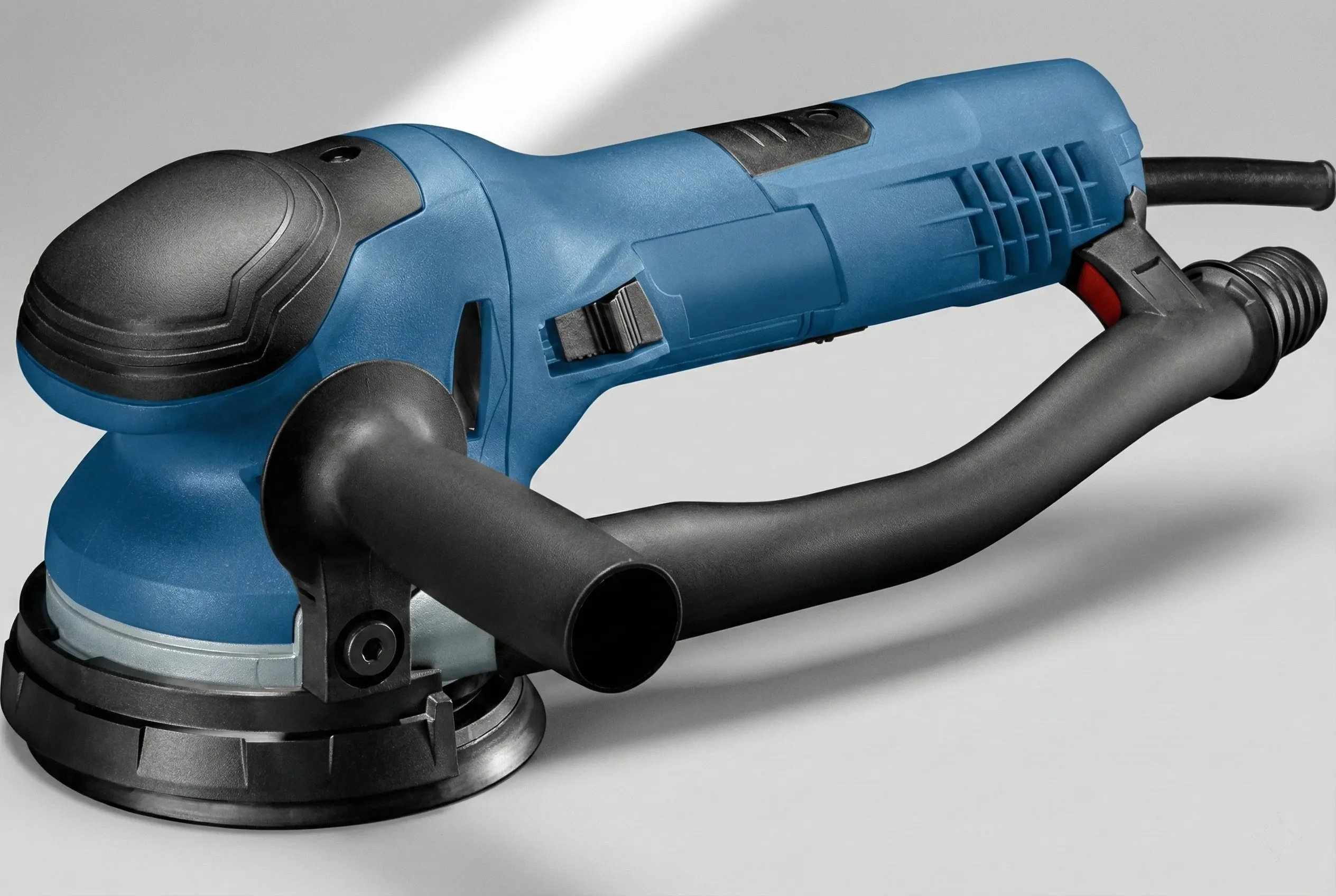
Quick CTA
Bosch GET65-5N
Prefer control and easier handling in mixed projects? This is the model to check first.
Check the price of GET65-5NGET75-6N (speed-biased)
- Faster flattening on broad surfaces
- More productive for repeated long, flat passes
- Less forgiving if you rush, over-press, or skip grit steps
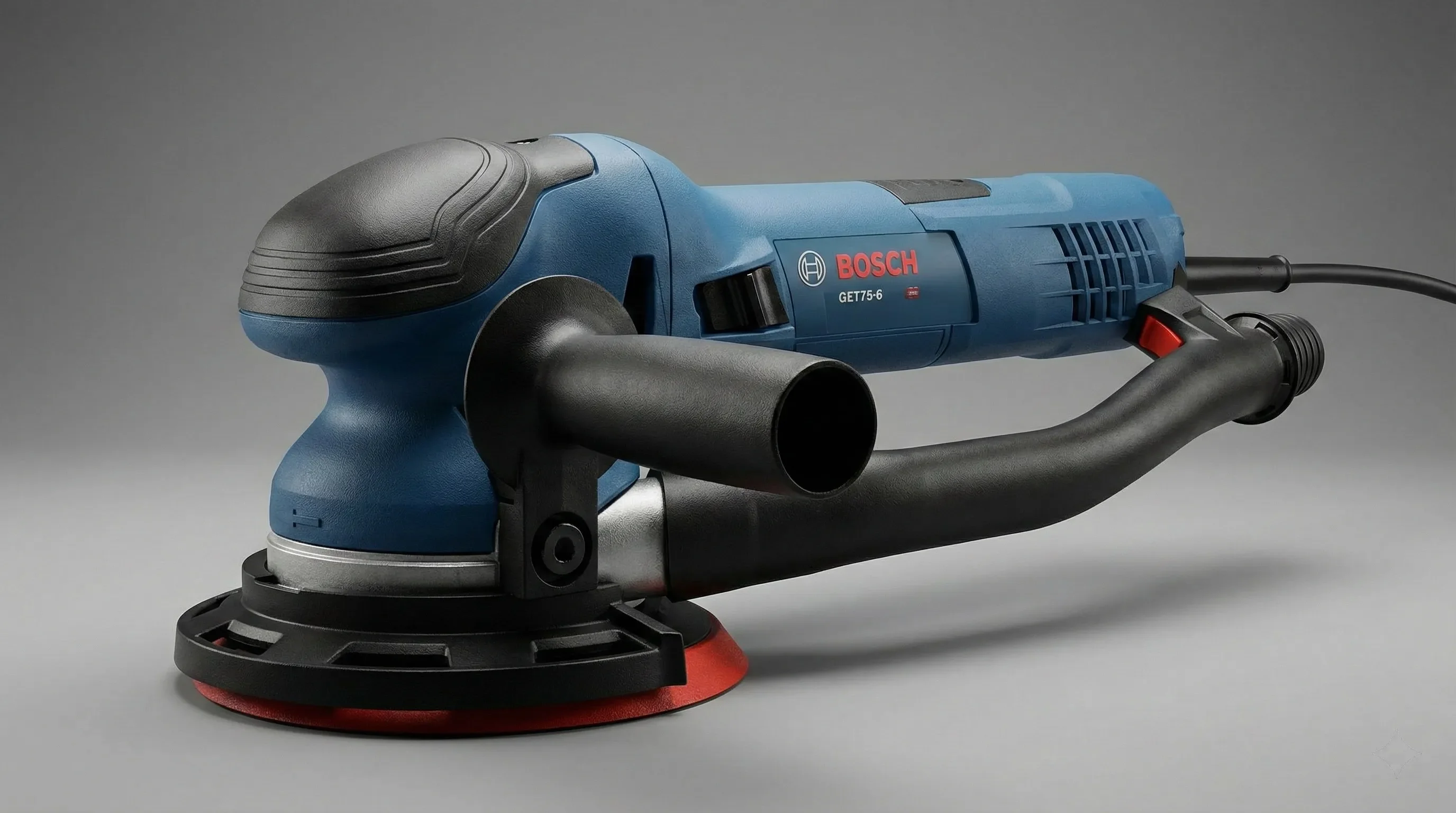
Quick CTA
Bosch GET75-6N
Need faster removal and wider pass coverage on flat surfaces? Compare current pricing here.
Check the price of GET75-6N5-Inch vs 6-Inch: Cost and Workflow Reality
Many buyers focus only on tool price, but long-term value is also about consumables and process.
Why 5 in (GET65) can be better for many DIYers
- Discs are often easier to find locally
- Better control on smaller parts and edge-heavy projects
- Slightly lighter feel during long mixed-task sessions
Why 6 in (GET75) can be better for throughput
- Bigger footprint means faster panel coverage
- Stronger fit for production-like workflows
- Best gains show up when dust extraction and grit discipline are already solid
Sanding Speed vs Finish Quality
A faster pass is not automatically a better pass.
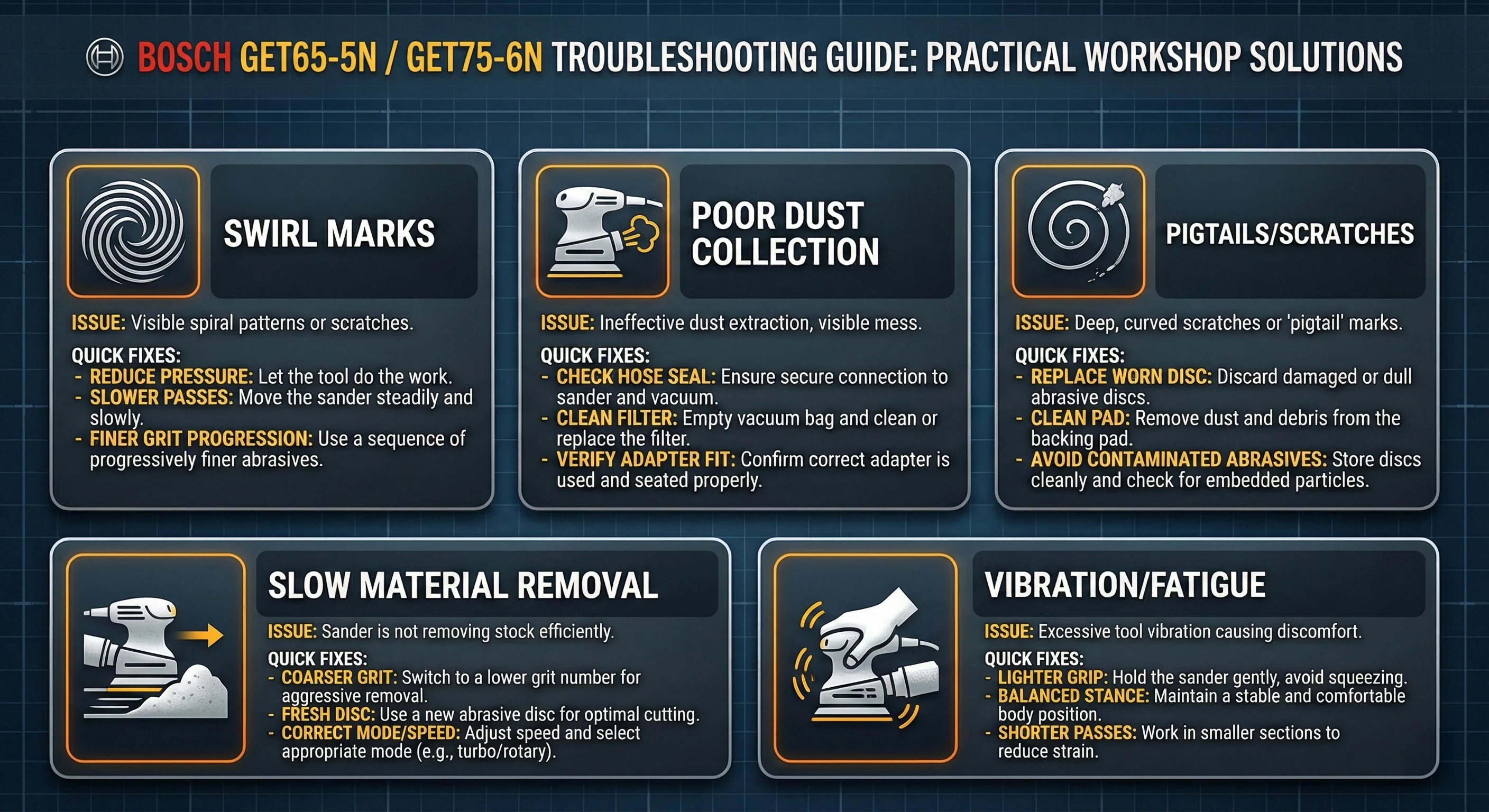
Both models can leave swirls if you push downward pressure, skip grit steps, or run worn abrasives.
Finish checklist (for either model)
- Let the machine weight do the work.
- Use overlapping, steady passes.
- Follow a clean grit progression (for example: 80 -> 120 -> 180).
- Replace dull discs early.
- Clean dust before final pass.
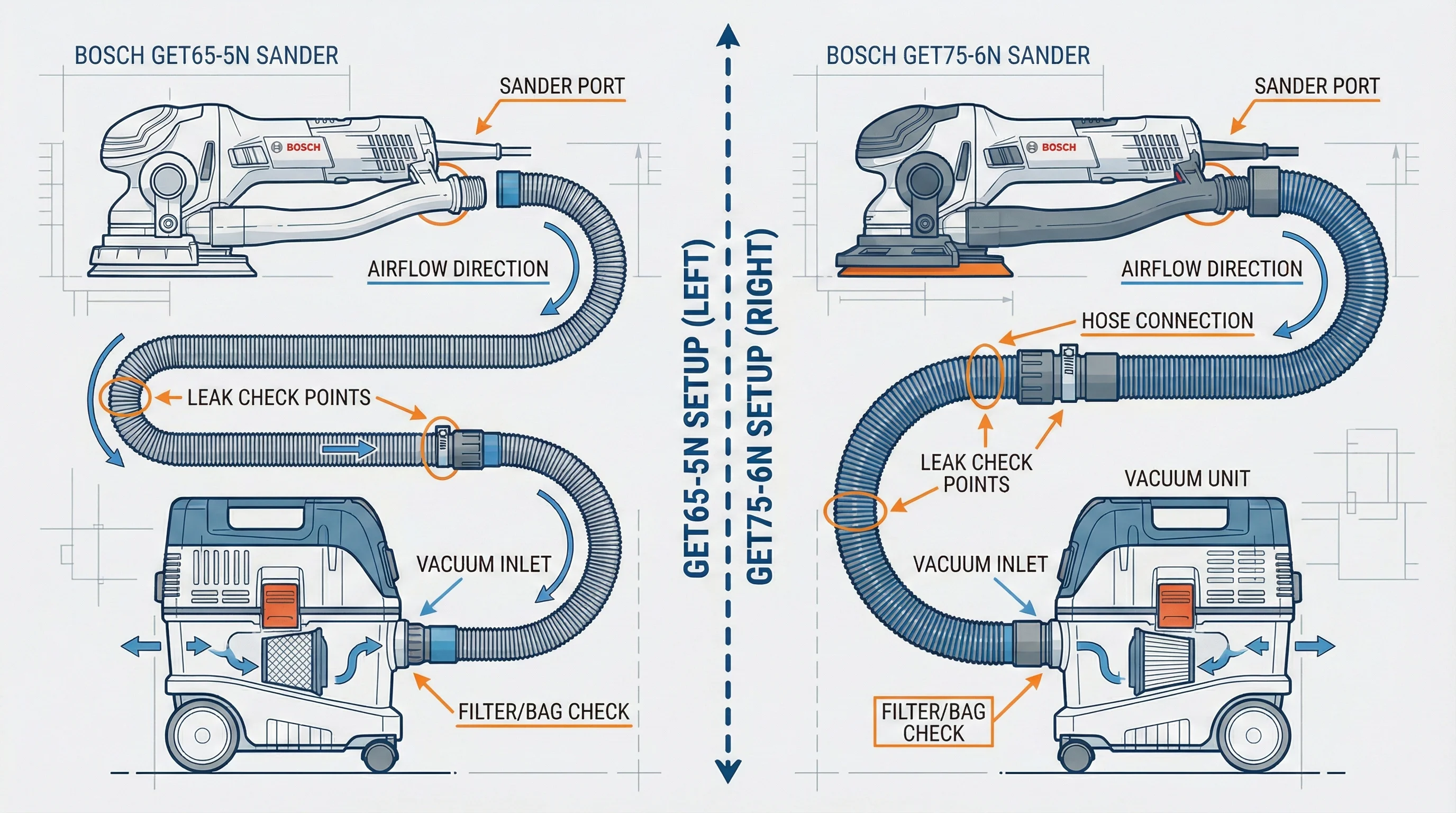
Dust Collection Setup (Biggest Multiplier)
A lot of tool complaints are actually dust setup issues.
- hotter abrasives
- random deep scratches
- slower cut rate
- faster disc and pad wear
Fast dust-check routine
- Hose seals tight at both ends
- Correct adapter size and fit
- Filter or bag not saturated
- No kinks in hose path
What Owners Commonly Report (and How to Avoid It)
- Turbo mode feels too aggressive -> Use lighter pressure, slower feed, and do not skip grits.
- Dust collection seems weak -> Verify adapter fit and vacuum airflow before blaming the sander.
- Finish quality inconsistent -> Usually grit sequence, worn discs, or dirty pad, not model choice alone.
Decision Flowchart
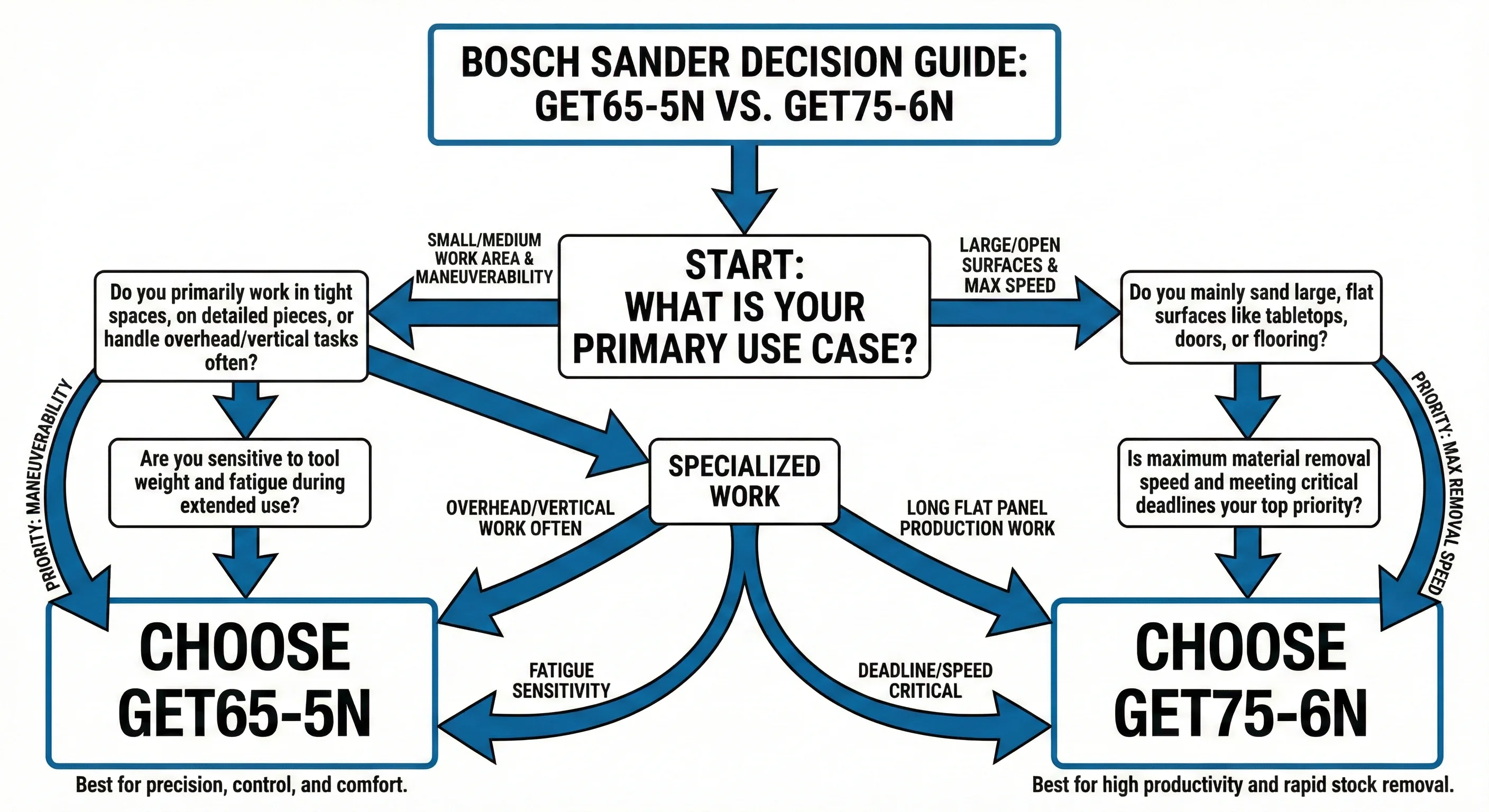
If you are unsure, default to GET65-5N for mixed DIY.
Video References (Hands-On)
FAQ
Is GET75 always better because it removes material faster?
No. It is faster in the right context, but not automatically better for final finish quality.
Can beginners use GET75 effectively?
Yes, but it is less forgiving. Technique and grit discipline matter more.
Which is better for furniture refinishing?
Usually GET65-5N, because control and consistency often beat raw speed.
Which is better for tabletops and large panels?
Usually GET75-6N, especially for repeated flat-area sanding.
Are 5 in and 6 in disc availability and cost important?
Yes. Over many projects, consumable availability and cost can impact value as much as tool price.
Final Recommendation
Choose Bosch GET65-5N if your priority is practical DIY control, comfort, and consistent finish quality across varied projects.
Choose Bosch GET75-6N if your workflow is speed-driven sanding on larger flat surfaces and your technique is already disciplined.
If you are still torn, buy for your most frequent task, not your occasional one.
Ready to buy
Bosch GET75-6N
Speed-focused pick for large flat-surface sanding.

Makita
Makita BO5041 5" Random Orbit Sander, Variable Speed

LDHTHOPI
LDHTHOPI Buffer Polisher, 1600W 7 Inch/6 Inch Rotary Buffer Polisher Waxer, 7 Variable Speed 1000-3500 RPM, Detachable Handle for Car, Boat Sanding, Polishing, Waxing

Makita